

Discovering the Secrets of Appleby Castle
What does it take for a castle to survive nearly 900 years, two wars with Scotland, an archbishop’s murderer as a landlord, and a direct order from Oliver Cromwell to tear it down? At Appleby Castle, the answer is one word: Anne.
Appleby Castle is one of the few Norman castles that have been continuously occupied since its construction in the 12th century.
The deep ditches of the first earthwork, dug in around 1095, remain.
At a Glance – The Secrets of Appleby Castle
- 🏰 Built: c. 1095 (earthwork), keep added c. 1110–1170
- 📍 Location: Appleby-in-Westmorland, Cumbria, on the edge of the Lake District
- 👑 Notable owners: Henry II, Richard I, John, Edward IV, and Richard III (as Duke of Gloucester)
- ⚔️ Survived: Capture by the Scots (1174), demolition by Cromwell’s forces (1648)
- 💪 Restored by: Lady Anne Clifford, who rebuilt the castle from 1651 and founded almshouses for elderly women in 1650
- 🛏️ Today: Grade I-listed, 23 bedrooms, 19 bathrooms, gym, sauna, hot tub, round tower, Norman keep, three cottages
- 🎣 Grounds: 25 acres of parkland with fishing rights on both banks of the River Eden
- 🐾 Stay nearby: Pet-friendly Kents Bank Holiday Cottage — 07785944194
Set within 25 acres of enclosed parkland, the castle lies on the edge of the Lake District and features sandstone walls beneath a pitched slate and lead roof.
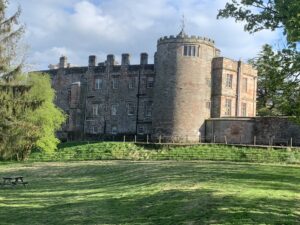
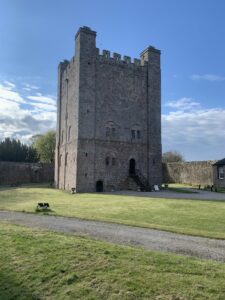
The lower part of the stone Keep may date from around 1110, when the first powerful local Norman Lord, Ranulf le Meschin, founded ‘New Appleby’ on the slopes between the castle and the River Eden.
Since then, the castle has been strengthened by many of its owners.
It needed to be because the Eden Valley was the scene of repeated conflicts between the English and Scots.
In 1174, the King of Scotland captured Appleby: following its recapture, the Keep was raised higher, and a stone curtain wall replaced the wooden palisades of the first Castle.
A gateway in this wall, guarded by a portcullis, stood near the stone Great Hall and may still be seen.
Also visible is a Round Tower, built around 1250, that overlooks the approach from town.

In the 1450s, the eastern range of buildings was extended again, and much of this work, too, remains today.
Ownership
Several Kings were also Lords of Appleby – Henry II, Richard I, John, and Edward IV, among them. King Richard III, when Duke of Gloucester, held the whole Lordship of Westmorland in the 1470s.
Other Lords of the Castle also featured in English history. Hugh de Morville was one of four assassins of Archbishop Thomas Becket in 1170.
Robert, the first Lord Clifford and former Earl Marshal and Lord High Admiral, was one of the leaders who fell at Bannockburn.
Many other Cliffords achieved fame during the period for which they were Lords of Appleby and hereditary High Sheriffs of Westmorland.
Perhaps the most remarkable of them was Lady Anne Clifford, born in 1590 and the only surviving child of George Clifford, third Earl of Cumberland, sea captain and champion to Queen Elizabeth I.
Passed over as inheritor of the family estates, she challenged her father’s Will, defying King James I to his face.
When Appleby and other Clifford Castles eventually came to her, she challenged Cromwell to stop rebuilding them.
Appleby Castle had itself been partially dismantled by Cromwell’s army in 1648, but just three years later Lady Anne began restoring it — work that has kept the castle in good repair ever since.

She dominated the Westmorland scene for nearly thirty years, restoring Churches and Castles and deciding who would be Member of Parliament and Mayor for Appleby!
Charitable work was also close to her heart.
In 1650 she paid £36 for a plot of land on which to build neaby almshouses for the area’s poor and elderly women — open to those so aged and frail that they could no longer earn their own food and clothing through labour.
The almshouses were built to house a “mother,” a “reader,” and twelve “sisters” in perpetuity, with humble dwellings arranged around a courtyard and fountain, and a small chapel for daily prayer.

Eleven rules once governed daily life there, covering everything from locking times to a weekly rota for sweeping the rooms.
Though those rules have long since fallen away, the almshouses still stand: an inscription above the arched entrance records their completion in 1653, and they have provided homes for elderly widows every year since — a legacy of Lady Anne’s generosity that endures to this day.
Today, the Grade I-listed castle is set within 25 acres of parkland and includes 23 bedrooms, 19 bathrooms, a gym, a sauna and a hot tub.
The property also includes a round tower, a Norman keep and three cottages.
The estate also has fishing rights on both sides of the River Eden, where salmon, trout and grayling thrive.
Where to Stay
If you are looking for a pet-friendly holiday cottage within easy access to Appleby-in-Westmorland, ring 07785944194 or enquire here.
❓ Frequently Asked Questions (FAQ)
1) What is Appleby Castle and where is it located?
Appleby Castle is a historic Norman castle and mansion house overlooking the River Eden in Appleby-in-Westmorland, Cumbria, England.
2) How old is Appleby Castle?
The castle dates back to the early 12th century, with its impressive keep, known as Caesar’s Tower, built around 1170, making it over 850 years old.
3) Who was Lady Anne Clifford, and why is she important to Appleby Castle?
Lady Anne Clifford was a famous owner and restorer of Appleby Castle in the 17th century, known for her extensive renovations and for preserving the castle’s heritage.
4) Can visitors tour inside Appleby Castle?
Yes, guided tours of Appleby Castle are available by appointment, and visitors can explore historic rooms, gardens, and climb Caesar’s Tower for fantastic views.
5) What makes Appleby Castle unique among English castles?
Appleby Castle is one of the few Norman castles in England that has been continuously lived in and features an intact Norman keep plus centuries of rich history, from Roman times to the present.
Conclusion
If you are looking for a holiday cottage with easy access to Appleby-in-Westmorland, ring 07785944194 or enquire here.
How to Book Kents Bank Holiday Cottage
Booking Kents Bank Holiday Cottage is quick and simple. Just visit our website at kentsbankholiday.co.uk or give us a call on 07785944194. We’re always happy to answer your questions and help you find the perfect dates for your stay.
Our friendly team makes the whole process easy, so you can focus on looking forward to your relaxing holiday in the Lake District.