

Cartmel Priory: Delve into the Secrets of a Timeless Sanctuary
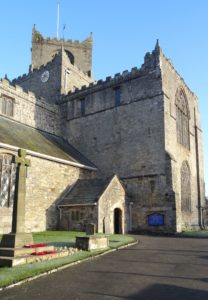
Why is Cartmel Priory so special? Standing at the heart of the picturesque village of Cartmel in Cumbria, Cartmel Priory is one of the most remarkable historic churches in the South Lake District.
Nestled at the southern edge of the English Lake District, this extraordinary building has drawn pilgrims, historians, and curious visitors for centuries — and it’s easy to see why.
There has probably been a place of worship here since before the Norman Conquest.
The Founding of Cartmel Priory: William Marshal, the Greatest Knight
Cartmel Priory owes its origins to one of medieval England’s most remarkable figures — William Marshal, widely regarded as the greatest knight who ever lived.
It was Marshal who founded the Priory in around 1188–1190, and his story is as extraordinary as the building itself.
Born into relatively modest circumstances, he rose through sheer skill, loyalty, and courage to become one of the most powerful men in England.
He served as regent to a young king following the death of King John, and was instrumental in shaping the Magna Carta — one of the most important constitutional documents in history. His reputation for honour and chivalry was unmatched in his time.
He ordered that an altar and a priest be provided for the village. The first canons of Cartmel came from Bradenstoke in Wiltshire.
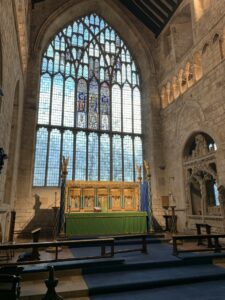
More than 800 years on, William Marshal’s legacy endures in the stones and soaring arches of this beautiful place — a priory he founded that still stands at the very heart of its community, as vital and welcoming today as it has ever been.
The present church is dedicated to St. Mary and St. Michael.
The Cartmel Martyrs and the Pilgrimage of Grace
Cartmel Priory’s history took a tragic turn in 1536 when its canons and several local villagers supported the Pilgrimage of Grace, the great northern rising against Henry VIII’s break with Rome and the Dissolution of the Monasteries.
After the rebellion failed, four of the monks and ten laymen from Cartmel were executed at Lancaster Castle for treason, and they later became remembered as the Cartmel Martyrs.
The priory itself survived, but the cost was severe, and the episode remains one of the most dramatic chapters in Cartmel’s story.
Visiting Cartmel Priory: What to See and Do
Cartmel Priory is open every day, and if you visit on a Sunday you’ll be greeted by the wonderful sound of church bells summoning worshippers to the morning service.
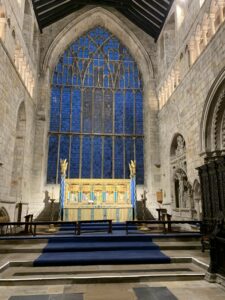
As you wander around this ancient church, look out for:
The Stained Glass and Carvings
The interior is filled with breathtaking stained glass windows that bathe the space in colour, alongside intricate carvings that speak to centuries of remarkable craftsmanship.
Guided Tours
Weekly guided tours of Cartmel Priory take place every Wednesday from 11am to 2pm.
These include tales of Cartmel monastery life, stories of battles with Henry VIII during the Reformation, and a fascinating glimpse into what daily life was like for the canons who lived here.
The Skull and Crossbones Gravestone
Look out for the gravestone inside the church bearing a skull and crossbones — a powerful memento mori symbol reminding us of our mortality.
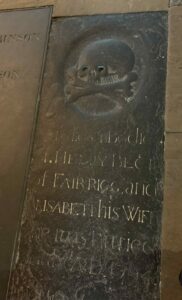
The winged hourglass carved alongside it warns that time flies. It’s a haunting and thought-provoking sight.
Harrington Tomb
Set into the wall in the Town Choir is the Harrington Tomb.
The Harrington Tomb commemorates John, the first Lord Harrington, who died in 1347, and his wife Joan.
Joan belonged to the Dacre family, whose Coat of Arms includes a shell and the badge of Pilgrims.

The two effigies are surmounted by a tall canopy supported by decorative arches with figures of saints.
On top is a seated figure of Christ showing the wounds in his hands to the world.
The 15th-Century Choir Stalls
In the chancel, you can see the 15th-century choir stalls with their remaining 26 carved misericord seats surrounded by the exquisite 17th-century screen.

The screen is decorated with ‘the True Vine’ (Christ) and the signs of the PASSION, the time leading to His death.
This beautiful screen, probably of Flemish workmanship, was gifted to the Church by George Preston of Holker Hall.
The Historic Organ
Songs of praise have been accompanied by organ music at the Priory since 1620, but the pipe organ you see today is a historic 1867 instrument built by Frederic Jardine of Manchester.
Frederic’s company built and repaired organs of all types and sizes from their purpose-built factory in Old Trafford, and they were the first British organ builders to design and build an organ specifically for the cinema, to accompany silent film.
It’s a wonderful thought that the same instrument filling the Priory with music today carries a connection to the very earliest days of British cinema.
The Memorial to Lord Frederick Cavendish
At the west end of the north aisle stands a large memorial to Lord Frederick Cavendish, killed in Dublin in 1891.

The alabaster plinth was designed by H.J. Austin, with the effigy by Thomas Woolner.
Rowland Briggs’ Bread
As you wander around, look out for a simple loaf of bread tucked inside the church.

This isn’t just decorative — it commemorates an 18th-century act of charity by Rowland Briggs, who left a generous donation to ensure bread was provided for those in need. The tradition continues to this day, a timeless testament to community spirit and generosity.
The Cromwell Door
This door (below) is known as ‘The Cromwell Door’.

This extraordinary door is pitted with holes believed to have been made by local people firing at Roundhead soldiers who stabled their horses in the nave during the Civil War.
It’s a visceral reminder of the turbulent history these walls have witnessed.
The Grave of William Wordsworth’s Teacher
In the south-west of the graveyard is the grave of Reverend William Taylor.
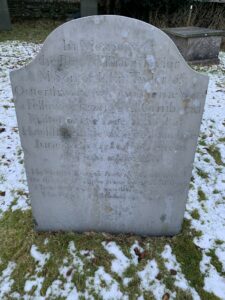
He was the headmaster of Hawkshead Grammar School and taught William Wordsworth — and it was Taylor who first encouraged the young poet to write.
Born in 1754 at Outerthwaite Farm, between Allithwaite and Flookburgh, Taylor studied at Cambridge before returning to teach in Cumbria.
He died in 1794 at the age of just 32, and for almost 240 years his grave stood largely anonymous and forgotten.
That changed On June 12th 2026, when a new walkway and illustrated storyboard were unveiled in the churchyard, making the grave far more accessible to visitors to the Priory.

Wordsworth later described Taylor as “the honoured teacher of my youth” in his autobiographical poem The Prelude, and wrote movingly of weeping at his grave — the new storyboard now stands near the very spot where the young poet is believed to have done so.

The unveiling included a tribute from Wordsworth biographer Professor Stephen Gill.
Morecambe Bay and the Priory’s Sobering Records
The registers of Cartmel Priory tell a sobering story of the treacherous sands nearby. Up to 1880, 141 people perished on the sands of Morecambe Bay, caught in quicksand or overtaken by the fast-moving tide — a stark reminder of the power of the natural landscape that surrounds this beautiful part of the Lake District.
Why Visit Cartmel Priory?
Whether you’re seeking a spiritual journey, a deep dive into medieval English history, or simply a tranquil and inspiring place to spend an hour or two, Cartmel Priory delivers.
It is one of the Lake District’s true hidden gems — a place where the story of William Marshal, the Black Canons of Saint Augustine, the English Civil War, and centuries of community life all come together under one extraordinary roof.
Where to Stay Near Cartmel Priory
If you’re planning a visit to Cartmel Priory and the surrounding Lake District, why not make a proper trip of it? Kents Bank Holiday Cottage in Grange-over-Sands is a beautifully located, dog-friendly holiday cottage just a short distance from Cartmel. It’s the perfect base for exploring the Priory, the village, and everything the South Lake District has to offer.
If you are looking for a dog-friendly Grange-over-Sands Holiday Cottages close to Cartmel, ring 07785944194 or enquire here.
❓ Frequently Asked Questions (FAQ)
1) What is the history of Cartmel Priory?
Cartmel Priory was founded around 1188–1190 by William Marshal for the Augustinian canons. It stands on a site of earlier worship and has evolved through medieval, Reformation, and modern periods.
2) What can I see inside Cartmel Priory?
Inside, you can view stained glass windows, carved misericord seats, the Renaissance screen (gifted by George Preston), the Harrington Tomb (with effigies), and gravestones bearing skull-and-crossbones motifs.
3) Is Cartmel Priory open to visitors, and are there guided tours?
Yes — the church is open daily, and there are guided tours every Wednesday from 11 am to 2 pm, which include stories of monastic life and historical events like the Reformation.
4) What is the significance of the skull and crossbones gravestone in Cartmel Priory?
The skull and crossbones motif is a memento mori symbol reminding visitors of mortality. It emphasises the passage of time and the impermanence of life.
5) What is special about the organ at Cartmel Priory?
The Priory has had organ music since 1620, but today’s pipe organ is a historic 1867 instrument by Frederic Jardine of Manchester — a company that was also the first in Britain to build organs specifically for cinema use during the silent film era.
6) Where can I stay near Cartmel Priory?
For visitors, a great option is the pet-friendly cottage Kents Bank Holiday Cottage in Kents Bank, close to Cartmel and Grange-over-Sands, with good access to local attractions.
How to Book Kents Bank Holiday Cottage
Booking Kents Bank Holiday Cottage is quick and simple. Just visit our website at kentsbankholiday.co.uk or give us a call on 07785944194. We’re always happy to answer your questions and help you find the perfect dates for your stay. Our friendly team makes the whole process easy, so you can focus on looking forward to your relaxing holiday in the Lake District.
5 Key Takeaways
- An 800-year-old legacy — Cartmel Priory was founded around 1188–1190 by William Marshal, widely regarded as the greatest knight in medieval England, and the man who helped shape the Magna Carta. His extraordinary story is woven into the very stones of the building.
- A living, breathing community church — Unlike many historic sites, Cartmel Priory isn’t a museum piece. It remains an active place of worship at the heart of village life, open every day and welcoming visitors and worshippers alike.
- Packed with hidden treasures — From the haunting skull and crossbones gravestone and the magnificent Harrington Tomb, to the Cromwell Door riddled with bullet holes and a humble loaf of bread honouring an act of 18th-century charity — every corner tells a story.
- A piece of musical history, too — The Priory’s 1867 pipe organ was built by Frederic Jardine of Manchester, whose company holds the distinction of building Britain’s first organs designed specifically for the cinema, to accompany silent films.
- A gateway to Lake District history — The Priory connects visitors to some of the biggest moments in English history, including the Magna Carta, the Reformation, and the English Civil War, all within one remarkable building in the Southern Lake District.
- The perfect reason to stay longer — With guided tours every Wednesday, the beauty of Cartmel village on the doorstep, and Kents Bank Holiday Cottage in nearby Grange-over-Sands offering a dog-friendly base, there’s every reason to make a proper trip of it.