

Derwent Pencil Museum, Keswick
Looking for one of the most unique and unexpected things to do in the Lake District?
Whilst museums dedicated to our national heritage can be found the length and breadth of Britain, few can match the Derwent Pencil Museum in Keswick for sheer curiosity value.
Nestled in the heart of the Lake District, this truly one-of-a-kind attraction draws over 80,000 visitors a year — and it is easy to see why.
The Home of the Pencil
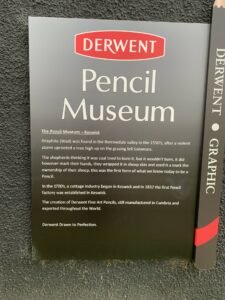
The story of pencil-making in Keswick stretches back over four centuries to the 16th century, when a vast deposit of the world’s purest graphite was discovered in the nearby Borrowdale valley.
Legend has it that a fierce storm uprooted a tree, exposing the “black lead” beneath — a discovery that would spark a global industry and earn Keswick its enduring reputation as the Home of the Pencil.
The Derwent Cumberland Pencil Co. was founded in 1832 as Banks, Son & Co., and their pencils were manufactured by hand in a small workshop.
The museum itself sits on the grounds of the original Cumberland Pencil factory building, which operated from 1832 to 2008, and the imposing 1916 factory building remains a celebrated Keswick landmark to this day.
What to See at the Derwent Pencil Museum
Visitors can discover how the world-famous range of Derwent fine art pencils are produced, exploring exhibits that trace the full history of pencil-making from those early Borrowdale graphite mines right through to modern manufacturing.
One of the most immersive experiences is the replica graphite mine at the entrance, which recreates the dark, damp conditions of an 18th-century Borrowdale mine and brings the origins of the industry vividly to life.
Among the highlights is the Guinness World Record-holding World’s Largest Pencil — a bright yellow giant measuring nearly 26 feet long and weighing over 450 pounds, completed in 2001 to celebrate the factory’s long history. It is quite the photo opportunity.
Perhaps the most intriguing exhibit of all, however, is the Second World War “spy pencil” — a fascinating piece of wartime history that would not look out of place in a spy thriller.
During the war, the factory was secretly commissioned by MI5 to produce pencils for RAF pilots that concealed a hidden silk map and a tiny compass inside the casing, designed to help downed airmen escape across enemy lines.
Visitors can learn about the real-life “Q” — Charles Fraser-Smith — who masterminded their design.
Completing the picture outside is a charming vintage delivery van, a nostalgic nod to the museum’s working past.
Hands-On Activities and Shopping
The museum is not just about looking — visitors can also take part in hands-on pencil-making workshops, creating their own unique souvenir to take home.
For those looking to stock up on art supplies, the on-site flagship Derwent Fine Art retail shop stocks the most comprehensive range of Derwent and Lakeland products in the UK, from professional artist-grade pencils to children’s colouring sets.
A fun piece of trivia: the Derwent Cumberland Pencil Company also supplied the pencils used in the much-loved 1982 animated film The Snowman.
Good news for dog owners too — the museum is dog-friendly, welcoming well-behaved dogs on leads throughout.

Completing the picture outside at the entrance is a charming vintage delivery van, a nostalgic nod to the museum’s working past.
Conclusion
Today, the Derwent Pencil Museum is a tribute to this rich history, showcasing a diverse collection of pencils and related items.
Where to Stay Near Keswick — Lake District Holiday Cottage
Planning a trip to the Lake District to visit the Pencil Museum and beyond?
A stay at Kents Bank Holiday Cottage in Grange-over-Sands offers the perfect balance of comfort, stunning scenery and freedom to explore.
With beautiful bay views, a peaceful location and pet-friendly facilities, it makes an ideal base for discovering Keswick, the Cumbrian coast and everything the Lake District has to offer.
📍 For availability and direct booking, visit www.kentsbankholiday.co.uk or call 07785944194.
Let your next Lake District escape begin at Kents Bank Holiday Cottage.
❓ Frequently Asked Questions (FAQ)
1) When was the Derwent Pencil Factory founded?
The origins of the company date back to 1832, when it was founded as Banks, Son & Co. It later became the Cumberland Pencil Company in 1916.
For nearly 175 years, it was a cornerstone of the Keswick economy before moving production to a more modern facility in Workington.
2) Why is Keswick known as the “Home of the Pencil”?
Keswick’s association with pencils began in the 16th century (circa 1550) when a massive deposit of the world’s purest graphite was discovered in the nearby Borrowdale valley. Legend says a fierce storm uprooted a tree, exposing the “black lead” beneath. This discovery eventually led to the birth of the global pencil industry right in the Lake District.
3) Is the factory still in operation in Keswick?
No, the manufacturing factory closed its doors in 2007 and relocated to Workington to allow for more modern production techniques. However, the original site in Keswick now houses the Derwent Pencil Museum, which welcomes over 80,000 visitors a year.
4) What is the “World’s Largest Pencil”?
One of the museum’s most famous exhibits is the Guinness World Record-holding color pencil. It is a bright yellow pencil measuring 7.91 meters (nearly 26 feet) long and weighing 446 kilograms. It was completed in May 2001 to celebrate the factory’s long history.
5) What were the secret WWII “Spy Pencils”?
During World War II, the factory was tasked with a top-secret mission by MI5. They created “spy pencils” for RAF pilots. These pencils looked ordinary but contained a hidden silk map and a tiny compass inside the casing to help downed airmen escape across enemy lines. You can see replicas and learn about the “real-life Q” (Charles Fraser-Smith) who designed them at the museum.
6) Why are pencils called “lead” pencils if they contain graphite?
The name is actually a historical mistake. When graphite was first discovered in Borrowdale, people thought it was a form of lead (Plumbago) because of its dark, metallic appearance. Although we now know it is a form of carbon, the name “pencil lead” has stuck for over 400 years.
7) How are pencils actually made?
Modern pencils are made by mixing finely ground graphite with clay. The ratio determines the hardness of the pencil:
More Graphite: Softer, darker lines (B grades).
More Clay: Harder, lighter lines (H grades). The mixture is extruded into “leads,” fired in a kiln, and then sandwiched between two slats of incense-cedar wood.
8) What is the “Replica Mine” at the museum?
Visitors enter the museum through a reconstructed graphite mine. This immersive exhibit simulates the dark, damp conditions of the 18th-century Borrowdale mines, showing how “wad” (the local name for graphite) was originally extracted by hand.
9) Can I buy Derwent art supplies at the site?
Yes! The museum features a flagship Derwent Fine Art retail shop. It stocks the most comprehensive range of Derwent and Lakeland products in the UK, from professional artist-grade pencils to children’s coloring sets.
10) Are dogs allowed inside the Museum?
Yes, the Derwent Pencil Museum is dog-friendly. Well-behaved dogs on leads are welcome to accompany their owners as they explore the history of the industry and view the exhibits.
How to Book Kents Bank Holiday Cottage
Booking Kents Bank Holiday Cottage is quick and simple. Just visit our website at kentsbankholiday.co.uk or give us a call on 07785944194. We’re always happy to answer your questions and help you find the perfect dates for your stay. Our friendly team makes the whole process easy, so you can focus on looking forward to your relaxing holiday in the Lake District.